When Intermittent Problems Require Permanent Monitoring
Periodic vibration routes are highly effective for many rotating assets. However, some problems occur only under specific operating conditions, making them difficult to capture during scheduled inspections.
That was the challenge facing a copper concentrator in northern Chile. A ball mill operating in the secondary grinding circuit was experiencing intermittent increases in vibration near the pinion and discharge side of the machine. The vibration response varied with circulating load and ore hardness, preventing the phenomenon from being consistently observed through route-based measurements or temporary monitoring campaigns.
To better understand the behavior of the asset, Xoren Ingeniería, Wilcoxon’s partners in Chile, designed and implemented a permanent monitoring solution capable of continuously collecting vibration and structural response data.
Understanding the Problem
During the preliminary evaluation, Xoren determined that the observed behavior could not be explained solely by the rotating components of the mill. The vibration response appeared to be influenced by an interaction between the machine and its supporting structure.
Because the condition occurred intermittently and depended on process conditions, periodic measurements were unlikely to provide enough information to confidently identify the source of the problem. Instead, the team concluded that continuous monitoring was necessary to capture vibration trends, waveforms, spectra, correlations, and alarm conditions as they occurred during normal operation.
The Monitoring Architecture
Xoren implemented a multi-layer monitoring architecture designed to observe both machine behavior and structural response.
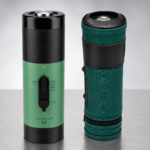
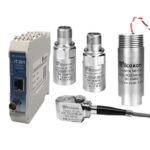
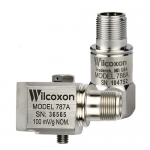
At the machine level, Wilcoxon’s VDS130 vibration data sources were deployed with IEPE vibration sensors to continuously monitor bearings, the pinion, gearbox, and motor.
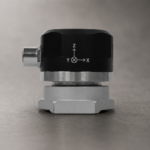
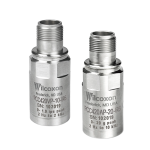
To evaluate structural behavior, Wilcoxon’s 883M triaxial digital accelerometers were installed on supports, the foundation, and structural members surrounding the mill. This additional layer of monitoring helped determine whether vibration events were associated primarily with machine dynamics or with structural response.
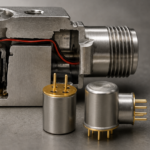
The system was further complemented with HBM LY41 strain gauges installed at selected locations to measure localized deformation and load transfer, along with MicroStrain distributed acquisition systems in areas where conventional wiring presented installation challenges.
Results
The permanent monitoring system established an operational baseline for the mill and provided visibility into vibration events as operating conditions changed.
The collected data confirmed that the vibration increases did not originate exclusively from the rotating drivetrain. Triaxial measurements showed that structural response increased during periods of higher process demand, while strain measurements reflected corresponding changes in structural behavior.
By combining machine vibration monitoring with structural measurements, Xoren was able to clearly distinguish mechanical excitation from structural response and better understand the interaction between the two.
The resulting information helped ensure that maintenance decisions were not focused solely on the gear train or support components. Instead, engineers were able to evaluate the broader system, including structural stiffness, load transfer, and support behavior on the discharge side of the mill.
A Data-Driven Approach to Critical Assets
For critical assets operating under varying process conditions, intermittent problems can be difficult to diagnose using periodic measurements alone. With this project, Xoren Ingeniería demonstrates how permanent monitoring can provide the continuous visibility needed to understand complex machine behavior and support more informed maintenance decisions.
Lea el caso de estudio original en español de Xoren Ingeniería.
 EN
EN ENGLISH