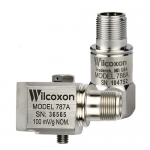
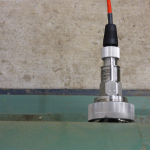
Combine your software intelligence with our signal integrity for an advanced vibration platform with unmatched front-end performance.
Wilcoxon’s digital adapters and embedded sensing elements let you broaden the reach of your vibration monitoring platform beyond traditional digital accelerometers. By integrating IEPE adapter technology, you can add high-resolution, wide-bandwidth digital vibration data to your existing MQTT-based vibration analytics platform.
Talk to us about integrating IEPE data into digital vibration platforms.
Connect IEPE Sensors to Your Digital Ecosystem
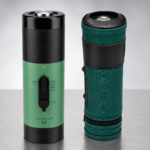
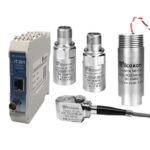
Our ILA and VDS adapters bridge the analog and digital worlds. They convert IEPE accelerometer signals into standard industrial data protocols — including MQTT, Modbus, and OPC UA — so your platform can ingest high-resolution vibration data from virtually any asset.
| Inline Adapters | Vibration Data Sources |
 |  |
| Single-channel, inline IEPE-to-digital adapters. Compact and easy to deploy, they digitize legacy or specialty analog sensors for direct MQTT output. | Multi-channel vibration data sources that accept up to four IEPE accelerometers and one tachometer input. |
| ILA200 Series specs and details | VDS100 Series specs and details |
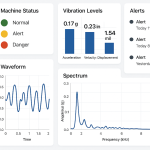
Both output vibration spectrum, time waveform, and calculated vibration metrics over MQTT for seamless integration with edge gateways and cloud analytics systems and make it simple to extend your sensor portfolio to high-performance industrial assets.
Why IEPE-to-Digital Adapters Expand (Not Replace) Your Capabilities
Digital sensors are ideal for low- to mid-frequency vibration monitoring and moderate environments. But some machines demand more bandwidth, sensitivity, or ruggedness than MEMS-based sensors can deliver. That’s where IEPE sensors, coupled with Wilcoxon’s digital adapters, expand your coverage.
| Challenge | Typical Limitation | IEPE-to-Digital Advantage |
| Monitoring high-speed or high-frequency assets | MEMS sensors lose accuracy or bandwidth over ~5 kHz | Frequency response to 10 kHz for the ILA and 40 kHz for the VDS, providing richer diagnostic data |
| Low-amplitude vibration detection | MEMS noise floor limits low-level signal capture | IEPE sensors deliver superior low-noise performance for early-fault detection |
| Harsh industrial environments | MEMS often limited by temperature or packaging | IEPE sensors are field-proven for heavy-duty applications, extreme conditions, and hazardous locations |
| Mixed or legacy asset fleets | Customers have installed IEPE sensors that won’t connect to your digital infrastructure | Converters digitize existing sensors and make the data available to modern connected systems |
| Long-term reliability | Newer digital sensing technologies may not have a long-term field history | Wilcoxon IEPE accelerometers have an MTBF of more than 25 years and field-proven reliability |
MQTT Integration Made Simple
The ILA and VDS adapters output vibration metrics, time-waveforms, and spectra using MQTT — the protocol of choice for modern condition-monitoring systems. Integration is as straightforward as subscribing to the published topics in your broker:
- Standard MQTT topic structure for waveforms, FFT, calculated metrics (acceleration, velocity, displacement, peak, RMS etc…)
- Compatibility with existing MQTT brokers, edge gateways, and cloud ingestion services
- Easy mapping into your analytics, dashboard, and alarm logic
This direct connectivity lets you add high-bandwidth IEPE data streams to your system with minimal development time.
LVEP: High-Resolution Sensing for Low-Power Nodes
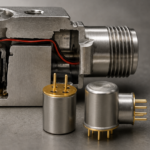
For wireless or battery-powered sensors in your portfolio, the LVEP-TO5 offers a low-power piezoelectric alternative to MEMS vibration elements. It provides the same advantages as IEPE sensors — broad frequency response and low noise at low vibration levels — in a compact form factor optimized for embedded designs.

Integrating the LVEP-TO5 sensing element into your digital sensor nodes allows you to:
- Extend frequency range for more advanced fault diagnostics
- Improve signal-to-noise ratio in low-vibration environments
- Maintain long battery life with micro-watt-level power draw
- Offer a premium sensing tier within your wireless product family
Build More Capability into Every Layer of Your Stack
Wilcoxon’s hardware portfolio gives platform providers multiple integration paths:
- Digital Accelerometers: Continue offering your native digital sensors for general purpose monitoring and mild factory environments.
- LVEP Element: Upgrade your wireless nodes where broad frequency and low-noise performance are vital to machinery diagnostics.
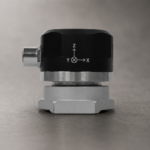
- Adapters (ILA, VDS): Digitize and publish IEPE sensor data for advanced diagnostics, harsh environments, and installed sensors.
Together, these options give your platform complete flexibility into your existing edge and cloud systems — covering everything from low-power networks to high-bandwidth industrial vibration monitoring.
The Result: Broader Coverage, Stronger Data, Faster Integration
By adding Wilcoxon’s devices to your digital platform, you can:
- Expand your ecosystem to include thousands of installed IEPE sensors worldwide
- Support both MEMS and IEPE data under a single MQTT platform
- Deliver higher-quality vibration analytics and fault detection
- Shorten development cycles and accelerate go-to-market for new sensor types
Let’s build the next generation of vibration monitoring together.
Talk to us about integrating IEPE data into digital vibration platforms.
 EN
EN ENGLISH