When a vibration reading looks wrong, the sensor is only one possible source of the problem. Cabling, connections, signal conditioning, data acquisition equipment and system configuration can all affect the measurement.
A handheld vibration shaker provides a known mechanical vibration input that can be used to verify the sensor and connected measurement chain in the field. By comparing the known input with the expected sensor response and the value reported by the monitoring system, technicians can identify where a discrepancy may be occurring before removing or replacing the sensor.
What is a handheld vibration shaker?
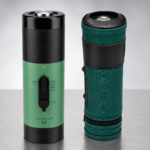
A handheld vibration shaker is a portable vibration reference source that applies a known mechanical vibration to a sensor so its response—and the response of the connected measurement chain—can be verified in the field.
Portable reference sources such as Wilcoxon ReferenceMate can be used with accelerometers, piezovelocity sensors, displacement sensors and 4–20 mA vibration sensors. Depending on the sensor and mounting configuration, adapters may be used to accommodate different mounting threads, captive-screw sensors and triaxial accelerometers.
How do you verify a vibration sensor in the field?
The basic principle is to apply a known mechanical vibration directly to the sensor. Because the vibration input is known, the expected sensor response can be determined from the sensor’s sensitivity or configured output range.
The resulting signal can then be observed at the sensor output or through the connected measurement system. If the measured value corresponds to the known input, the test provides confidence that the sensor, cabling and connected equipment are functioning together as expected.
For example, when a 100 mV/g accelerometer is subjected to a 1 g vibration, the sensor should produce approximately 100 mV. If the sensor, cabling and data acquisition system are functioning and configured correctly, the system should interpret and display that input as 1 g.
If the measured value does not match the expected response, the known vibration input provides a reference for troubleshooting where the discrepancy occurs.
How can a handheld shaker help troubleshoot the complete measurement chain?
An unexpected vibration reading does not necessarily mean that the vibration sensor has failed. A problem can occur anywhere between the measurement point and the system where the vibration data is ultimately displayed or used.
Applying a known mechanical input gives technicians a controlled starting point for checking the measurement chain:
Sensor → cabling and connections → junction box or enclosure → signal conditioning or data acquisition → monitoring or control system
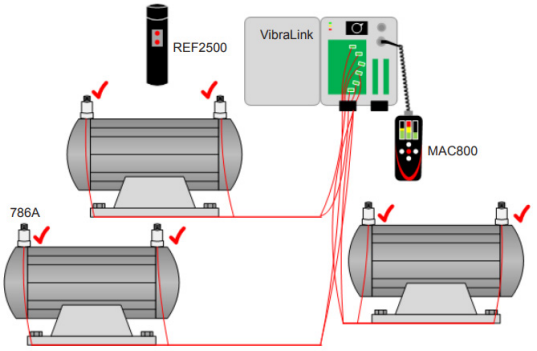
If the sensor produces the expected output but the value reported elsewhere in the system does not correspond to the known input, troubleshooting can move downstream through the measurement chain.
Conversely, if the sensor itself does not respond as expected, further sensor testing or calibration may be appropriate.
This approach can help avoid unnecessarily removing, replacing or sending out a sensor when the problem lies elsewhere in the system.
What can a portable vibration reference source be used for?
Installation and commissioning
A known vibration input can verify that a newly installed vibration sensor and its connected measurement chain are functioning correctly before the measurement point is placed into service.
Measurement-chain troubleshooting
A portable vibration reference source can help determine whether an unexpected reading originates with the sensor or elsewhere in the measurement chain, including cabling and connected measurement equipment.
Sensor functional verification
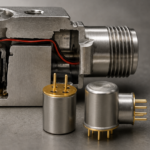
Accelerometers, piezovelocity sensors and displacement sensors can be checked against a known vibration input to confirm that they respond as expected.
Condition monitoring system checks
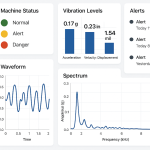
A known mechanical vibration can be used to confirm that vibration measurements are reaching the equipment used to monitor machine condition.
4–20 mA vibration system verification
For 4–20 mA vibration sensors, the known input can be used to check the sensor’s scaled output as well as configured full-scale ranges and alarm or trip setpoints in PLCs, DCSs and SCADA systems.
Can you verify a 4–20 mA vibration sensor with a handheld shaker?
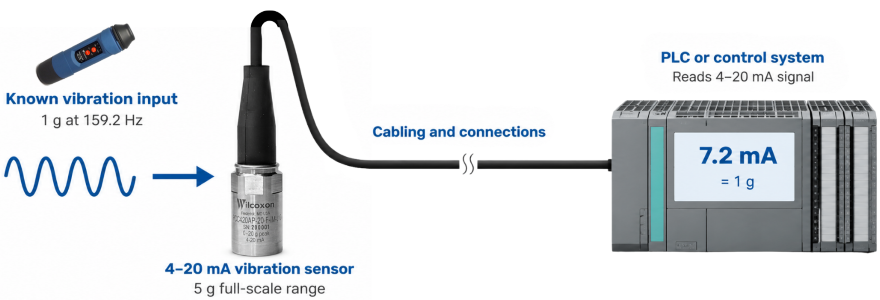
Yes. If the vibration input and the sensor’s configured full-scale range are known, the expected current output can be calculated.
For example, consider a 4–20 mA vibration sensor configured for a 5 g full-scale range. The 16 mA measurement span represents 5 g, or 3.2 mA/g. With a 1 g vibration input, the expected sensor output is:
4 mA + 3.2 mA = 7.2 mA
That known response can be checked at the sensor and through the connected measurement system. If the system is configured correctly, the 7.2 mA signal should correspond to 1 g.
The same test can also help verify that alarm or trip setpoints associated with the vibration measurement are configured and responding as intended.
Is vibration sensor verification the same as calibration?
No. Field verification and calibration serve different purposes.
Functional verification checks whether a vibration sensor and its measurement chain respond as expected to a known input. It is useful for installation checks, routine system verification and troubleshooting.
Calibration determines and documents sensor performance against a traceable reference standard under controlled conditions.
A handheld vibration shaker can provide confidence that a sensor and measurement system are functioning correctly, but field verification does not replace laboratory calibration, which measures and documents sensor performance against a traceable reference standard.
Why is 1 g useful for vibration sensor verification?
A 1 g reference input makes the expected response of many vibration sensors straightforward to determine.
For a 100 mV/g accelerometer, 1 g produces approximately 100 mV. For a sensor with another sensitivity, the expected output can similarly be calculated from the sensor specification.
The same known acceleration can also be used with sensors whose outputs are expressed in velocity, displacement or a scaled process signal such as 4–20 mA.
Why does ReferenceMate use 159.2 Hz for handheld vibration shaker testing?
At 159.2 Hz, a sinusoidal acceleration of 1 g corresponds to approximately 9.8 mm/s of vibration velocity. This relationship provides convenient reference values for checking sensors that measure acceleration or velocity.
Not all shakers from all manufacturers use the same operating frequency, but 159.2 Hz is a commonly used reference frequency for field vibration verification.
What types of vibration sensors can be checked with a handheld shaker?
Depending on the capabilities and mounting options of the portable vibration reference source, handheld shaker testing can be used with:
- Accelerometers
- Piezovelocity sensors
- Displacement sensors
- 4–20 mA vibration sensors
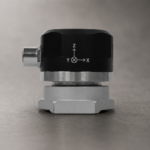
- Triaxial accelerometers
Sensor weight and mounting configuration must also be considered. Mounting studs and adapters can extend compatibility to different thread sizes, captive-screw configurations and other sensor designs. Wilcoxon offers a range of mounting adapters that make ReferenceMate compatible with 95% of Wilcoxon vibration sensors.
ReferenceMate portable vibration reference sources
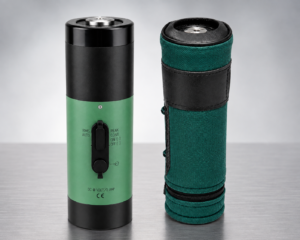
Wilcoxon ReferenceMate portable vibration reference sources provide a known mechanical vibration for field verification of vibration sensors and connected measurement systems. Designed for use at the measurement point, ReferenceMate handheld vibration shakers support functional verification, commissioning and troubleshooting without requiring the sensor to be removed simply to determine whether the problem lies elsewhere in the measurement chain.
Explore ReferenceMate portable vibration reference sources
 EN
EN ENGLISH